Warehouse operations are getting harder to manage consistently.
Customer requirements are becoming more complex. Inventory flows change constantly. Labor turnover remains high. And across co-packing, contract manufacturing, and value-added logistics environments, warehouse and operational workflows are increasingly interconnected.
At the same time, many operations are caught between two extremes:
- relying too heavily on manual processes and tribal knowledge,
- or deploying more complex warehouse systems than the operation realistically needs.
That middle ground is becoming increasingly important.
The reality inside many warehouse environments
In a lot of operations, putaway decisions still depend heavily on experience.
Teams know:
- where certain customers typically want inventory stored,
- which areas are easier for staging or production access,
- where overflow inventory tends to go during busy periods,
- and how the building actually operates day to day.
That operational knowledge is valuable. But it also becomes harder to scale consistently as operations grow, staffing changes, and facilities become more dynamic.
For many co-packers, contract manufacturers, and value-added 3PLs, the challenge is not necessarily a lack of systems.
It is the gap between having systems and executing warehouse workflows consistently across shifts, teams, and facilities.
Why lighter warehouse execution capabilities matter
Not every operation needs a large enterprise WMS rollout.
Some facilities absolutely do. Others need a more practical way to bring structure and operational guidance into everyday warehouse workflows without introducing another large standalone platform or taking on a year-long implementation project.
That is especially true in environments where:
- warehouse workflows are tightly connected to production or fulfillment activities,
- facilities are smaller or more operationally dynamic,
- operational flexibility matters,
- or teams simply want to extend the capabilities of systems they already use every day.
For many existing Nulogy Shop Floor users, that is where capabilities like Directed Putaway become valuable.
Bringing more warehouse guidance into Shop Floor
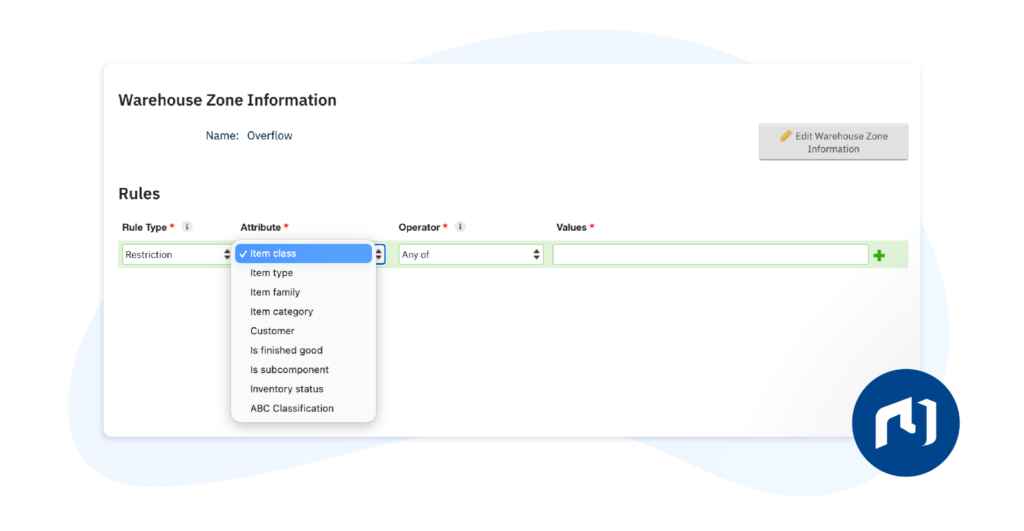
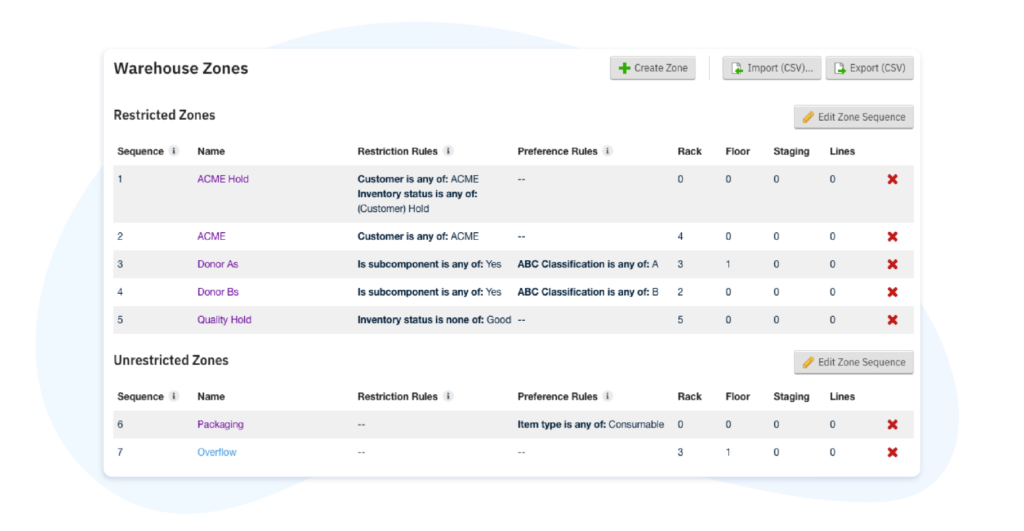
Directed Putaway helps warehouse teams guide inventory to recommended storage locations using configurable warehouse zones and operational rules directly inside Nulogy Shop Floor.
Operators receive putaway recommendations within the workflows they already use. Teams can accept the recommendation or choose a skip reason to receive an alternate location.
The capability helps operations:
- improve consistency across shifts and warehouse teams,
- onboard warehouse staff faster,
- reinforce customer or operational requirements,
- improve warehouse organization and space utilization,
- and reduce variability in day-to-day putaway execution.
Importantly, Directed Putaway is not about turning Shop Floor into a heavyweight WMS.
It is about helping operations strengthen warehouse execution in environments where existing processes may have outgrown spreadsheets, manual workarounds, or purely experience-driven decision-making.
And because it exists within Shop Floor, users can implement and operationalize the capability quickly using workflows, teams, and systems they already know.
Faster time to operational value
For many warehouse and operations leaders, speed matters as much as functionality.
Large WMS projects can require significant IT involvement, operational disruption, retraining, and long deployment timelines. That level of investment may make sense for highly complex distribution environments, but not every facility needs that level of overhead to improve warehouse execution.
Directed Putaway gives operations teams a faster and more practical path toward:
- more consistent putaway workflows,
- clearer warehouse guidance,
- improved onboarding,
- and stronger warehouse organization.
For existing Shop Floor users, that means adding meaningful warehouse execution capabilities without introducing another disconnected system into the environment.
In many cases, teams can move from planning to operational use in weeks, not months or years.
Extending operational consistency without adding unnecessary complexity
For some organizations, Directed Putaway may complement existing warehouse systems across parts of the network.
For others, it may provide the right level of warehouse execution capability for operations that do not require a traditional enterprise WMS deployment.
Both scenarios are increasingly common.
As co-packers, contract manufacturers, and value-added logistics providers continue balancing operational flexibility with growing complexity, many are looking for technology that fits the realities of how their facilities actually run.
Not heavier for the sake of being heavier.
Just more consistent, more scalable, and faster to operationalize.
To learn more about how a lightweight warehouse management system can deliver faster ROI for your operation, contact us or request a demo today.