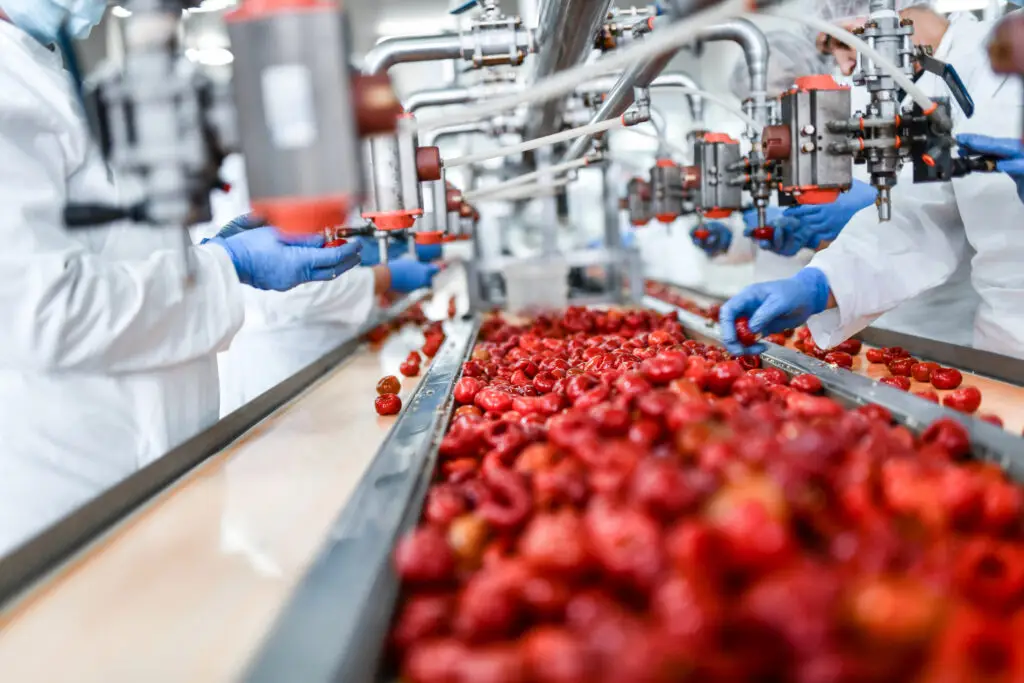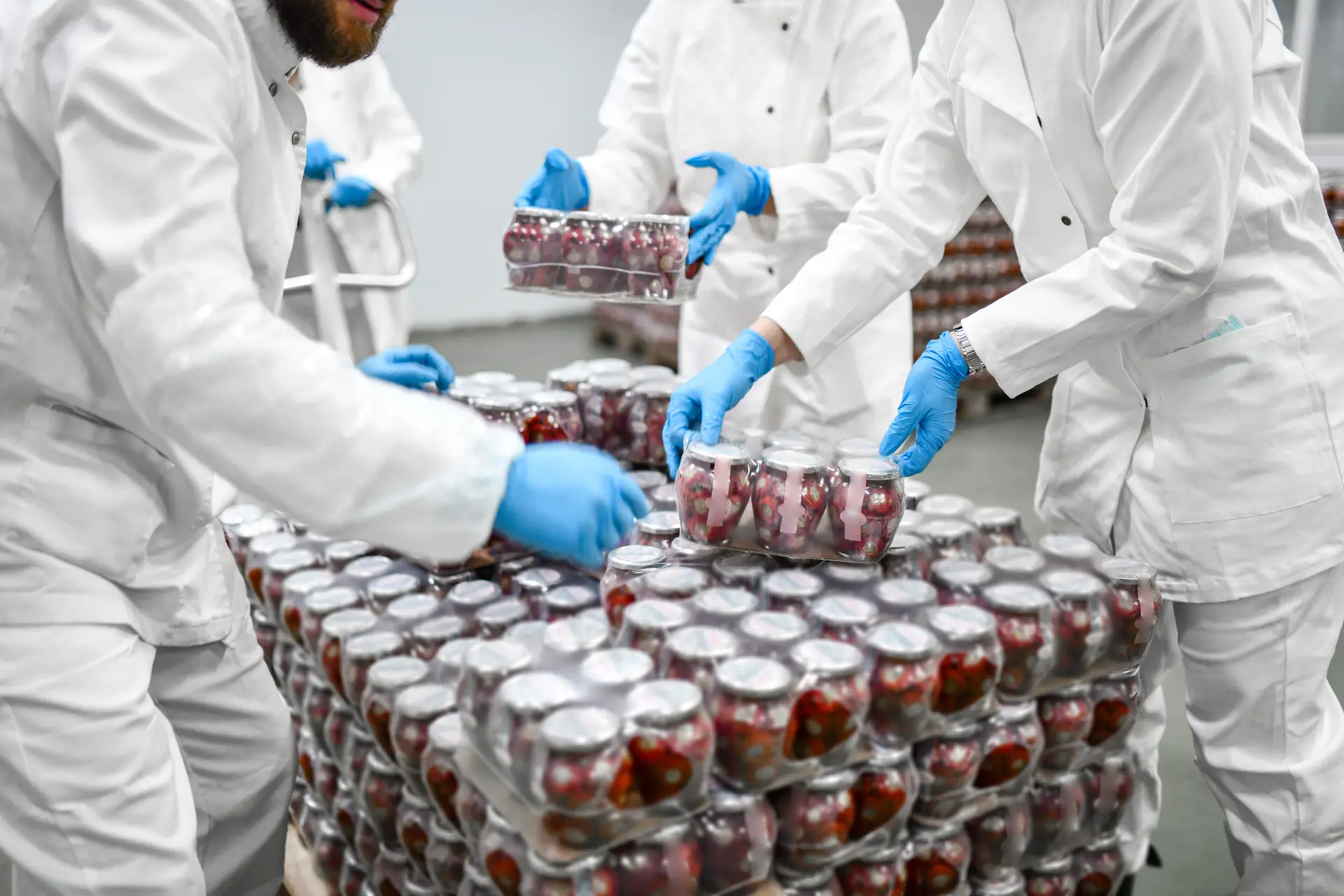
A food traceability program is the documented system a food manufacturer uses to track every ingredient, intermediate product, and finished good through the supply chain — from the point it was grown or produced to the point it was sold or consumed. A complete food traceability program captures lot-level data at every Critical Tracking Event (CTE), links incoming ingredients to outgoing products through a Traceability Lot Code (TLC), and stores records in a format that can be produced to regulators within 24 hours of a request.
Under FDA’s FSMA Section 204, food manufacturers that handle foods on the Food Traceability List (FTL) are required to maintain electronic traceability records meeting this standard by July 2028. This guide explains what a food traceability program requires, how to build one, and what technology makes it work.
Why a food traceability program matters
Foodborne illness outbreaks linked to a single contaminated ingredient can affect hundreds of thousands of consumers across dozens of states before the source is identified. A well-built food traceability program compresses the time to identify, contain, and remove contaminated product from weeks to hours. A documented traceability program with clean records significantly reduces legal exposure in a recall, speeds reinstatement with retailers after an issue, and demonstrates due diligence to auditors, regulators, and buyers.
The five elements of a food traceability program
1. Critical Tracking Event (CTE) identification
FDA FSMA 204 defines CTEs as the events where traceability data must be captured: Growing, Receiving, Transforming (processing), Creating (manufacturing), and Shipping. Every food manufacturer that handles FTL foods must identify which CTEs occur at their facilities and ensure records are captured at each one.
2. Key Data Element (KDE) capture at each CTE
For each CTE, FSMA 204 specifies the Key Data Elements that must be recorded. At Receiving, KDEs include the TLC of the received item, the date and location of receipt, the quantity, and the name and location of the immediate previous trading partner. At Shipping, KDEs include the TLC, the date and location of the shipment, the quantity, and the name and location of the immediate subsequent recipient. At Transformation and Creation, KDEs link the TLCs of all input ingredients to the TLC assigned to the output product.
3. Traceability Lot Code (TLC) assignment and linking
The TLC is the foundational identifier in a food traceability program. Every lot of food must carry a unique TLC that identifies the food, the facility where the TLC was assigned, and the date assigned. At transformation, the TLCs of all input ingredients must be linked to the TLC of the output product — this is what makes trace-back and trace-forward possible during a recall.
4. Electronic record maintenance and 24-hour response
FSMA 204 requires traceability records to be maintained in electronic, sortable spreadsheet format — or in an electronic system that can produce such a file on demand — for two years. In the event of an FDA request, records must be produced within 24 hours. Paper-based systems cannot reliably meet this requirement.
5. Mock recall and continuous testing
Best practice requires quarterly mock recalls — starting from a random lot code and running a full trace-forward to all customers and trace-back to all ingredient sources. The benchmark for a mature food traceability program is completing a full mock recall in under 30 minutes.
How to build a food traceability program: step by step
Step 1: Audit your current state. Document where lot codes are currently captured, what records exist at each CTE, how long records are retained, and how quickly you could produce a complete lot history on demand.
Step 2: Map your CTEs and FTL foods. Identify which products you manufacture or handle that appear on FDA’s Food Traceability List and map every CTE where records must be captured.
Step 3: Design your KDE capture workflows. For each CTE, define how KDEs will be captured — through barcode scanning at receiving, process step recording at transformation, and shipment confirmation at shipping.
Step 4: Implement electronic records and TLC linking. Deploy a food traceability software system that assigns TLCs, links input TLCs to output TLCs at transformation, and maintains a searchable record of all KDEs.
Step 5: Train your team and run mock recalls. Train receiving, production, and shipping teams on new workflows. Run your first mock recall and time the response.
Step 6: Extend traceability to your suppliers. Work with your ingredient suppliers to ensure they can provide lot-level TLC data at time of delivery.
How Nulogy supports food traceability programs
Nulogy’s quality management capabilities help capture KDEs at every CTE as part of standard production workflows, links TLCs from input ingredients to output products, stores two years of traceability records, and generates a complete FDA-ready data package on demand. Customers including Henderson Group and Bushmills use Nulogy to run mock recalls in minutes and maintain audit-ready traceability records across multi-plant networks.
A program is the process. Lot traceability software is what makes that process survive a real recall window, and choosing it has its own checklist.
Frequently asked questions
What is required in a food traceability program under FSMA 204? A FSMA 204-compliant food traceability program must capture Key Data Elements at every Critical Tracking Event, assign and link Traceability Lot Codes from input to output, maintain electronic records for two years, and produce a complete traceability data package to the FDA within 24 hours of a request.
When is the FSMA 204 traceability compliance deadline? The FDA extended the compliance deadline for most covered manufacturers to July 20, 2028.
What foods are covered by FSMA 204 traceability? FSMA 204 applies to foods on the FDA’s Food Traceability List, which includes fresh produce (leafy greens, tomatoes, peppers, cucumbers, herbs), shell eggs, nut butters, fresh-cut fruits and vegetables, and certain seafood and cheese categories.
How long must food traceability records be kept? FSMA 204 requires traceability records to be maintained for two years from the date the record was created.
To learn more about how Nulogy can help you effectively manage your food traceability program, contact us or book a demo today.