Free Playbook

Waste Not: Solving Materials Management Challenges in the External Supply Chain

What inefficient materials management costs FMCG companies and their co-packers and contract manufacturers, what stands in the way of fixing it, and how to choose a solution. Custom content produced by studioID, Industry Dive's content studio.

Format: Playbook, by studioID for Nulogy
Covers: Materials Costs, Roadblocks and 3 Steps

Get the Free Guide

Download the playbook and see where materials visibility breaks down in your external supply chain.

What's Inside

Materials management is where OTIF is won or lost

Buy too much material and you tie up warehouse space, raise carrying costs and risk writing off stock that expires or goes obsolete. Buy too little and co-packers and contract manufacturers scramble to cover shortages, with production delays, line downtime and expedited freight. Either way, the cost ends up at the retailer's door as missed OTIF targets.

This playbook, created for Nulogy by studioID, Industry Dive's content studio, covers the price of inefficient materials management, the roadblocks to improving it, the role of data, and three steps to choosing a materials management solution. Download the guide, then see how Nulogy Supplier Collaboration tracks in-transit and on-hand inventory across your external partners.

"On average, 85-90% of incoming orders are short on materials, which means it is critical to have the materials data visibility needed to effectively collaborate with customers and suppliers." Nick Pai, Master Planner, Crescent Park Corporation
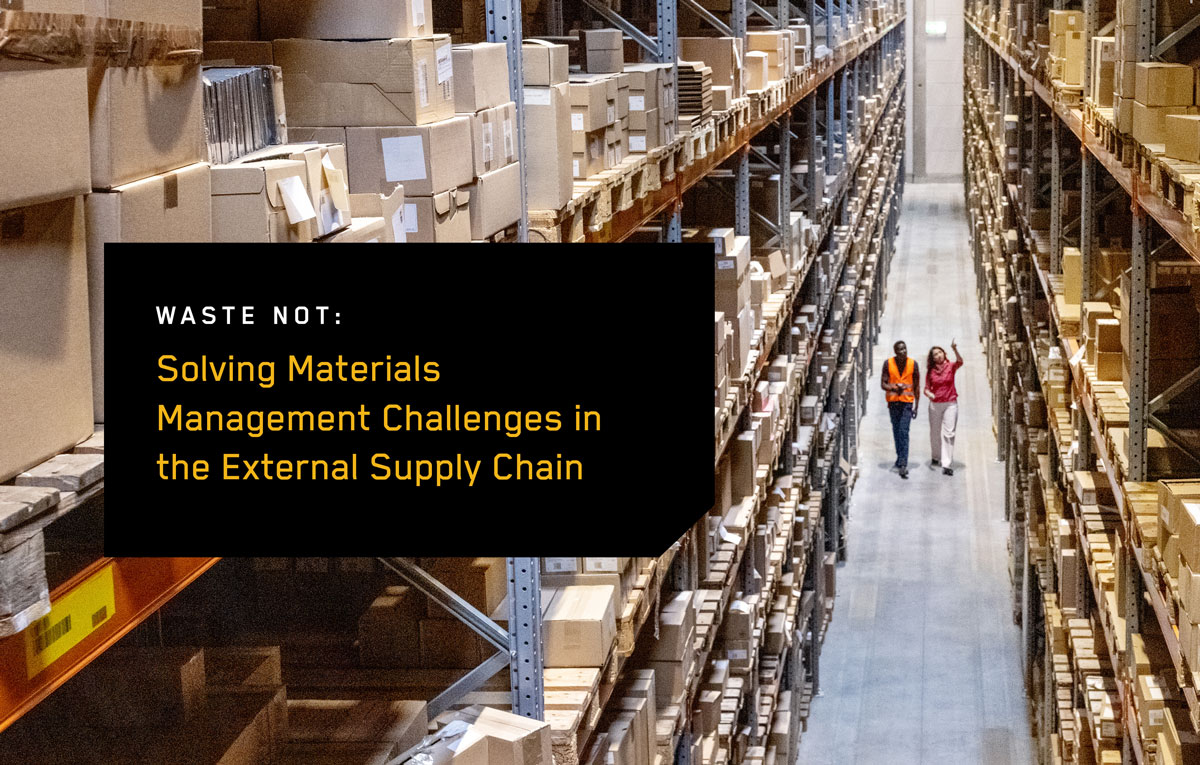
Waste Not playbook title card over a photo of a warehouse aisle

The playbook, at a glance

85 to 90%
Of incoming orders are short on materials, says Nick Pai, Master Planner at Crescent Park Corporation
3
Roadblocks that keep organizations from improving materials management
3
Steps to choosing a materials management solution
15 min
Inventory reconciliation at a global life sciences manufacturer using Nulogy Supplier Collaboration, down from 120 minutes
Inside the Guide

What the playbook covers

The playbook's sections in order, from what poor materials management costs to how to choose a fix.

01

The Price of Inefficient Materials Management

Excess materials clog warehouse space, raise carrying costs and can expire. Too little leaves partners scrambling, with delays, downtime and expedited shipping that put OTIF and shelf space at risk.

02

Roadblocks to Improving Materials Management

Three issues that get in the way: constant firefighting that leaves no time for planning, the need to coordinate many departments and stakeholders, and the cost of onboarding a new solution.

03

The Critical Role of Data

Why brands and their co-packing and contract manufacturing partners need real-time visibility into the purchasing, movement and consumption of materials across multi-tiered networks.

04

Inventory, In-Transit and Needed Materials

How a purpose-built solution can show current inventory across locations alongside materials in transit and materials needed, based on forecasts or order history.

05

Vendor Ordering Details and Pricing Levels

How automating vendor lead times, minimum order quantities and volume pricing supports smarter purchasing and safety stock decisions.

06

Three Steps to Choosing a Solution

Look for data visibility between you and your partners, choose a vendor with a proven track record in co-packing and contract manufacturing, and favor a cloud-based subscription model that scales as you grow.

Common Questions

Waste Not Playbook FAQ

1What does the guide cover?

The price of inefficient materials management in the external supply chain, three roadblocks to improving it, the critical role of data, three areas where a purpose-built solution can make a difference, and three steps to choosing a materials management solution.

2Who is this guide for?

FMCG companies and their external partners, such as contract packagers and manufacturers, especially planners and materials managers who still track materials in spreadsheets or homegrown tools.

3What does OTIF mean?

OTIF stands for on time, in full: the share of orders delivered on the agreed date with the full quantity ordered. Retailers use OTIF to measure supplier performance, and missing OTIF requirements can bring fines.

4What should a materials management solution show?

According to the playbook, a materials management solution should bring together current inventory across locations, materials in transit and materials needed for upcoming orders, along with vendor lead times, order quantities and pricing levels.

5How does Nulogy Supplier Collaboration support materials management?

Nulogy Supplier Collaboration tracks in-transit and on-hand inventory across external partners, including at-risk and expired stock, and keeps every order on the same item and BOM data. One global life sciences manufacturer cut inventory reconciliation from 120 to 15 minutes.

See Nulogy Supplier Collaboration in Action

Talk to our team about materials visibility across your external supply chain.

  • In-transit and on-hand inventory, including at-risk and expired stock
  • The same item and BOM data on every order
  • Planners keep their existing planning tool
Book Your Demo