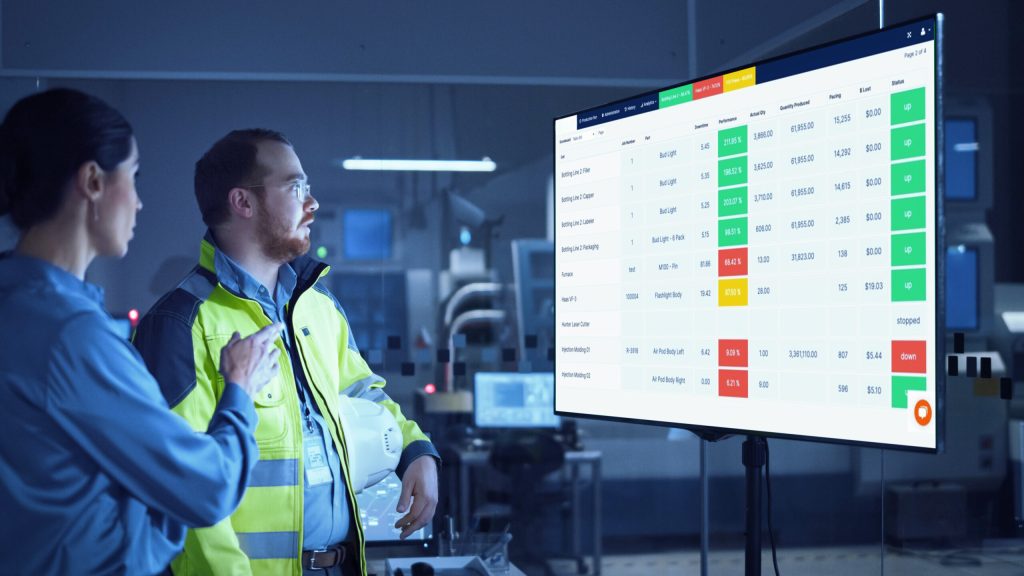
Plenty of production monitoring tools are easy to justify for a single line at a single site. The harder question, and the one most plants skip during evaluation, is what happens when that single line becomes three lines, or that one site becomes three sites. A tool that was the right fit at a smaller scale can quietly become the reason a plant can’t scale further.
The scale problem most plants don’t see coming
A monitoring system built for one line often relies on point-to-point integrations, one connection per machine, per protocol, configured by hand. That works fine for a pilot. It becomes a real cost, in integration hours and ongoing maintenance, once a plant adds a second and third line running different machine vendors and ages. The plants that feel this first are usually the ones that picked a tool based on what a single line needed, without asking what ten lines would need.
What “never outgrow” actually requires
Software a manufacturing business won’t outgrow needs a few specific things: a connector catalog broad enough to handle a mixed fleet, Modbus, OPC UA, S7, DXM, and similar protocols, without a custom integration for every new machine; deployment measured in days rather than months so adding a line doesn’t mean another lengthy implementation; and a data model that scales from one line’s shortstop detail to a multi-site view without losing granularity. Nulogy Smart Factory is built this way, which is a large part of why it’s positioned as the production monitoring system a manufacturing business won’t outgrow.
The subscription floor question
Scale isn’t only a technical question, it’s also a commercial one. A platform priced and packaged around a single line’s needs can make it expensive or awkward to add the second and third line, especially for a plant still proving out the value on line one. Evaluating fit means asking not just whether it works for the line you have today, but what the contract and the implementation actually look like when you add the next one.
What replacing Excel and paper actually solves for
Most plants considering production monitoring software today are replacing Excel trackers and paper downtime logs. That’s the right first move, but it’s worth choosing a replacement that can also carry the plant through its next stage of growth, rather than solving today’s problem and creating tomorrow’s migration project. See how plants make the move off paper downtime logs without having to repeat the process a year later when they add a second line.
Questions worth asking before you sign
- How many machine protocols does the connector catalog support out of the box, and what happens when we add a machine vendor it doesn’t already cover?
- What does implementation actually look like for line two, not just line one?
- Does maintenance data live in the same system as downtime and OEE, or is that a separate tool we’d need to add later?
- Can an assistant like Nora answer questions across multiple lines and sites, or only the one it was set up for?
Why this matters more for co-packers and multi-brand operations
The scale question is sharpest for contract manufacturers and co-packers running multiple brand customers across multiple lines, where a monitoring tool that can’t add a line without a fresh integration project directly limits how fast the business can take on new work. See what an external manufacturing management platform covers for how production monitoring fits into that broader picture.
The cheapest mistake to avoid in a production monitoring evaluation is buying for the plant you have today without checking whether the same system still fits the plant you’ll have in two years. Explore how Smart Factory scales from one line to a full multi-site operation, or read about what a connected line’s data actually needs to include.
Ready to see Nulogy in action? Book a demo with our knowledgable solutions team today.