Unplanned downtime is a cost and time killer for manufacturers, no matter the size. Downtime creates production bottlenecks, order delays, and damages customer relationships. In fact, downtime hamstrings even the largest manufacturers in the world. According to estimates by Siemens, “the world’s 500 biggest companies lose almost $1.4 trillion annually through unplanned downtime, equivalent to 11% of their revenues.”
Tackling unplanned downtime in manufacturing can take many forms. Adopting predictive maintenance and condition-based monitoring, however, has proven effective in limiting downtime and increasing throughput on the plant floor.
Here are three capabilities of the ideal predictive maintenance solution, and how they can help manufacturing floors produce more effectively and with fewer delays and bottlenecks.
Fosters Proactive Maintenance
Most manufacturers struggle with maintenance because their data is stuck in silos—hidden in binders, spreadsheets, or generic CMMS tools that don’t talk to the plant floor. This mindset leads to reactive firefighting and over-maintaining healthy machines just because the calendar says so.
By implementing a solution that ties directly into real-time machine data and supports multiple trigger types for maintenance orders, manufacturers can plan maintenance more efficiently, effectively, and proactively. Your machines get serviced exactly when they need it, instead of relying on static calendar-based scheduling. By doing so, manufacturers can catch failures before they happen, mitigating downtime and risk.
Ties Production to Maintenance
A major missing link on many manufacturing floors is when production data and maintenance data are siloed off from one another. Kept on separate software systems, spreadsheets, or binders, it is impossible to tell how maintenance improves production efficiency and throughput. Further, many CMMS tools aren’t built for the plant floor, so the disconnect between asset usage and maintenance grows even wider.
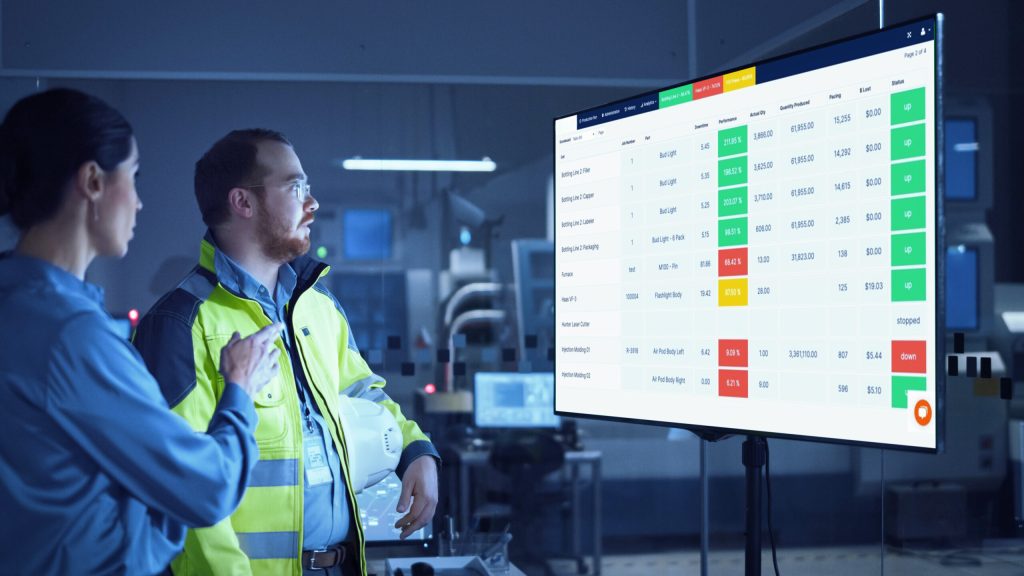
By embedding a maintenance solution directly into a production monitoring system, manufacturers can gain a clear, real-time picture of how closely production and maintenance are connected. Asset usage during production can inform smarter maintenance scheduling, and production performance can be tied directly to maintenance actions. Manufacturers can finally gain the insights needed to plan for the long-term performance of the plant floor.
Clear Prioritization
Labor is scarce, and your team’s time is valuable. When there is no clear or aligned prioritization of asset maintenance, that confusion and manual effort eats into their schedules. However, when your maintenance solution is tied to your production monitoring system, every team can see the data showing how each asset is tied to production. Which machines pose the greatest risk for bottlenecks? Which machines make the most impact on throughput? With a CMMS that’s directly integrated into plant floor execution, everyone is on the same page when determining asset prioritization for maintenance.

Stop Downtime Today With Nulogy Maintenance
Nulogy Maintenance offers all the above benefits and eliminates maintenance challenges by bringing both production and maintenance into a single ecosystem. Maintenance orders are automatically triggered by machine condition signals, usage data, and operator requests, rather than fixed calendar schedules, ensuring machines are serviced exactly when needed, not before or after. Work is prioritized by asset criticality and live line impact, so teams focus where it matters most.
Because maintenance and production data share the same system, manufacturers can see directly how maintenance activity improves output over time. It is available as a native solution within Nulogy’s Manufacturing Operating System (MOS) and connects with existing systems such as ERP and MES, enabling manufacturers to extend and enhance their current technologies.
Ready to learn more about how Nulogy Maintenance can provide an easy solution to your downtime issues? Contact us or request a demo today.