
Home / Where We Help / Reduce Unplanned Overtime
Part of Nulogy Smart Factory

Reduce Unplanned Overtime

Missed targets are often flagged far too late, when the only fix left is overtime. Nulogy Smart Factory alerts teams the moment a line is falling behind, giving them time to respond before costly overtime is necessary.

What Causes Unplanned Overtime?

Unplanned overtime happens when a shift, a day, or a week comes in short of target and the only way left to close the gap is to add hours. The cause is rarely one big failure; instead, it's a string of small stoppages and slow changeovers that nobody caught until the numbers were already tallied.

Fixing this issue doesn't start with scheduling more hours. It starts with seeing a shortfall while it is still forming, early enough in the shift to fix the cause instead of paying for it afterward.

Ways to Reduce Unplanned Overtime

1

Catch a Shortfall While It's Still Fixable

See hourly output against target in real time, so a supervisor can react in the third hour of a shift, not discover the miss in the shift report.

2

Get Alerted the Moment Throughput Drops

A mobile or email alert flags a stoppage or a slow line the moment it happens, instead of waiting for someone to notice at shift change.

3

Find the Real Cause, Not Just the Symptom

See a Pareto of the downtime reasons eating into the shift, and fix the one cause responsible for most of the lost time, instead of guessing.

4

Protect the Schedule Without Paying for It Twice

Every OEE point recovered during the shift is output you did not have to buy back with overtime hours. It is one of the fastest ways to protect OEE.

5

Create Achievable Targets

Accurately track against the schedule, and provide employees the ability to understand the goals, creating transparency. Understand planned versus actual production. Are you planning too much in a week? Are you on track to meet your goals?

A scoreboard and operator screen can help people understand what the targets are and where they stand every day, in real-time. When you accurately track against the schedule, you’re not only promising efficient planning and understanding of capacity, but creating a balanced overtime schedule that inevitably creates a happy workforce.

6

Visibility Into Your Progress

Are you going to meet daily or weekly goals? Getting visibility into how you’re doing against the targets for the week will enable you to schedule and plan accordingly. How far ahead or behind the schedule are you at any given time?

Make adjustments as needed to make sure you’re going to deliver on-time and not run overtime on the weekend.
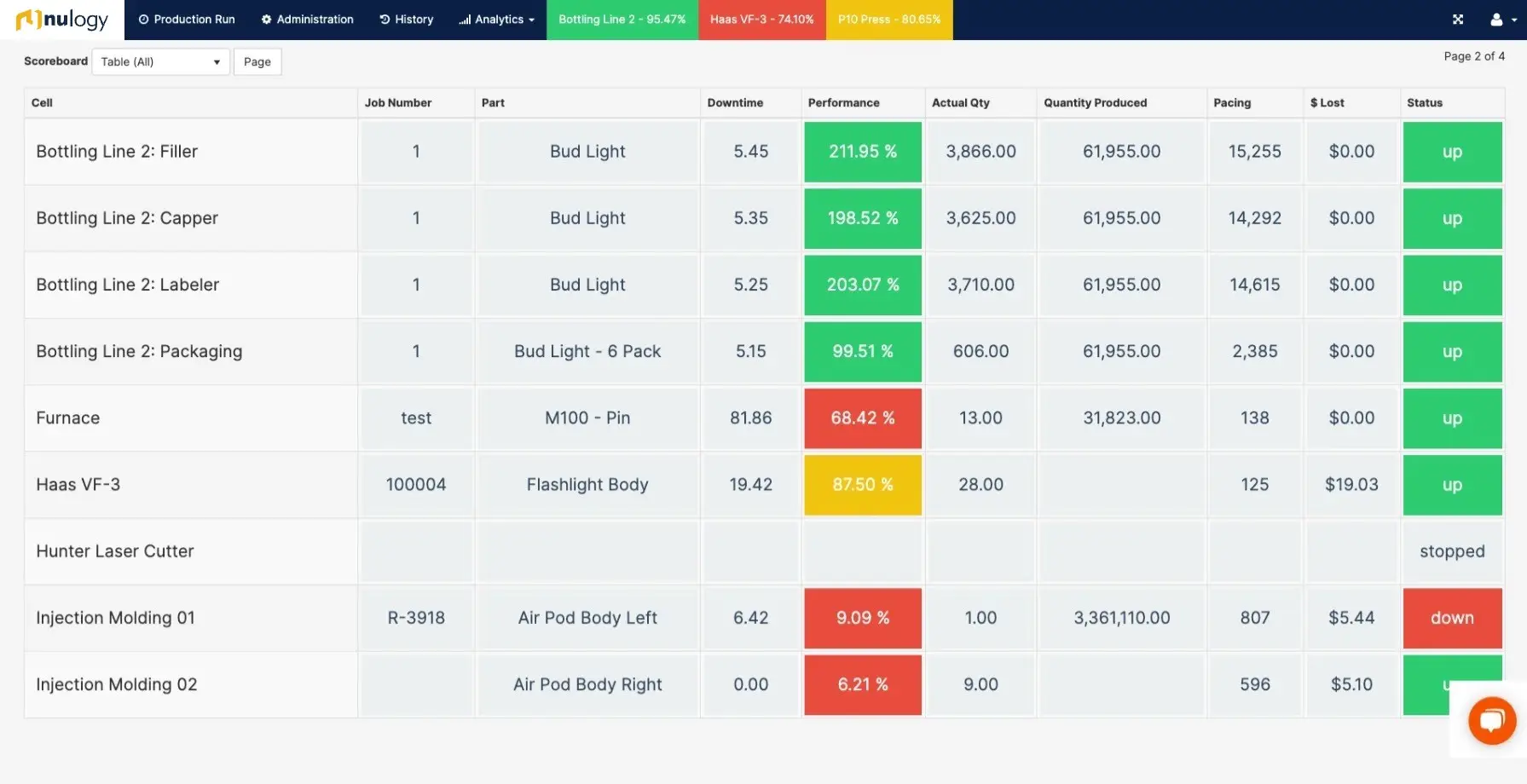
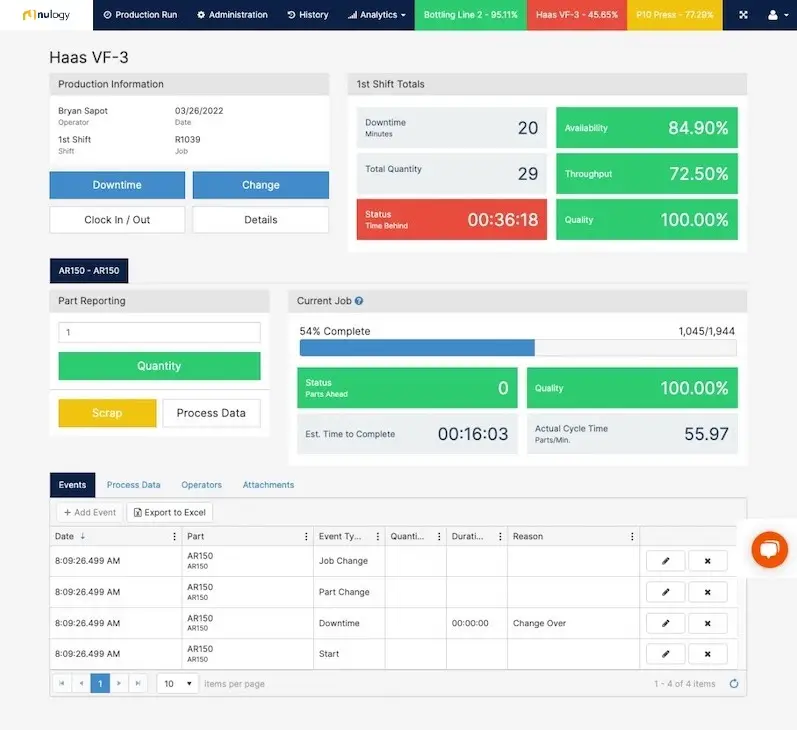
Production scoreboard in Nulogy Smart Factory showing each line's status against targetNulogy Smart Factory operator screen showing the current job, shift totals and target progress

How Nulogy Reduces Unplanned Overtime

Overtime is what you pay when a shortfall isn't caught in time. Nulogy Smart Factory connects to your existing equipment, tracks output against target line by line, and flags a shortfall while there is still time in the shift to fix it. Because it runs on the same platform that offers OEE tracking and connected maintenance, the shortfall, its cause, and the fix live on the same data. Plus, you can ask Nora, the built-in AI assistant, why a line is behind.
Real time
Output tracked against target the moment it starts slipping, not at shift change
Any machine
Connects to existing equipment, no rip-and-replace
10 to 20%
Typical Year 1 OEE increase, output you don't have to buy back with overtime
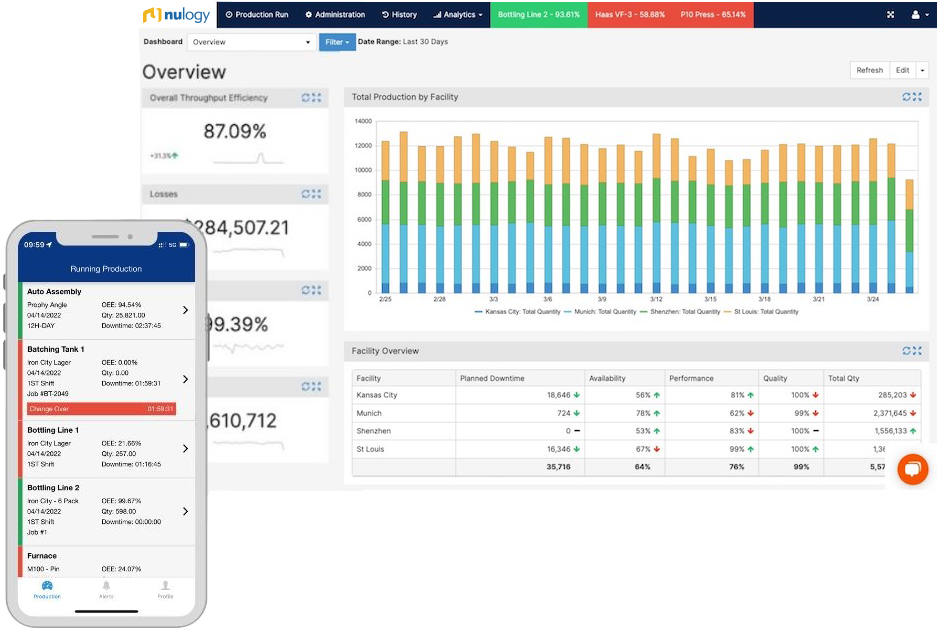
Nulogy Smart Factory dashboard showing live output against target
Nora, the Nulogy AI assistant
Nulogy Intelligence

Ask Nora Why the Shift Is Behind

Nora is the manufacturing AI assistant built into Smart Factory. Ask in plain English, like "why is Line 5 behind target this shift?", and Nora answers from live production data in seconds, charts it, and can create the follow-up maintenance task, before the shortfall turns into a call for overtime.

Meet Nora on Smart Factory →

See Smart Factory in Action

9x
Return on investment
Tacony

"I receive emails about the previous day's performance every morning at 6am. I can quickly compartmentalize what I need to be worried about."

Nick Hinman, VP Corporate Strategy, Tacony
Read Customer Stories
“A reduction in overtime was exactly what we were looking to do with this project, and that’s exactly what we have achieved.”
Chad Hill, CEO, Versatech

Case study: “This helped us reduce errors and work more efficiently.” Read more

Frequently Asked Questions

What causes unplanned overtime on a production floor?
It happens when a shift, a day, or a week falls short of target and the only way left to close the gap is to add hours. It is usually a string of small stoppages and slow changeovers that nobody caught until the numbers were already tallied.
How does Nulogy Smart Factory reduce unplanned overtime?
It tracks output against target in real time and flags a shortfall while there is still time in the shift to fix it, on the same platform as OEE tracking and connected maintenance, so the cause and the fix live on the same data.
Does this replace the whiteboard and the end-of-shift report?
Yes. It replaces manual tracking with automated capture and live dashboards, so a supervisor sees a shortfall forming instead of reading about it after the shift is over.
How much overtime can we expect to reduce?
Most customers see a 10 to 20% OEE increase in year one, output recovered inside the shift instead of bought back with overtime hours. Tacony, a diversified manufacturer, saw a 9x return on investment after cutting a 14-week order backlog to under six weeks.