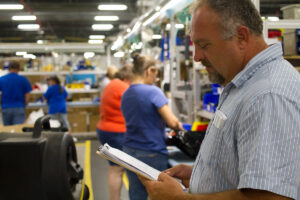
Based in Illinois, Versatech provides manufacturing and engineering services in the areas of robotics, automation, workholding with hydraulic integration, contract manufacturing, job shop prototyping and low volume runs, and lean manufacturing consulting.
Versatech Boosts OEE by 30% Through Smart Factory
By replacing paper tracking and manual spreadsheets with Nulogy Smart Factory, Versatech increased its OEE by 30% and achieved ROI within three months due to efficiencies gained from having real-time data visibility on the plant floor.
The Problem:
Versatech was looking for a production monitoring system that could replace their paper-based tracking and spreadsheets, which were time-consuming to update and maintain. The company needed real-time production data so teams could make efficiency improvements on the plant floor, as well as automate reporting processes and improve overall data accuracy.
Outcomes:
After switching to Smart Factory, Versatech saw their OEE jump by 30% and enabled the business to achieve ROI in less than three months.
More specifically, Versatech observed benefits in the following areas:
Better Plant Floor Visibility: CEO Chad Hill believed that by providing real-time data to its quality, engineering, and maintenance, production teams, Versatech could enhance the efficiency of their operations. Specifically, they could improve the ability to reduce overtime, decrease downtime, and improve machine utilization.
“We wanted to get the data into one location and have a single tracking system that looked at data in real-time,” Hill explains.
Reduced Downtime: Versatech used Smart Factory to analyze their unscheduled downtime instances by correlating them with specific events. This level of detail enabled Versatech to quickly solve issues and address negative trends on the plant floor. Further, the level of automated data reporting provided by Smart Factory drastically improved team efficiency.
Reduced Costs From Labor and Scrap: The real-time data visibility provided by Smart Factory, in addition to the time saved by using a more efficient production tracking workflow, also allowed the organization to recognize negative trends in scrap rates in real-time. This data helped prevent several major “cost-killers”, resulting in significant savings for the business.