
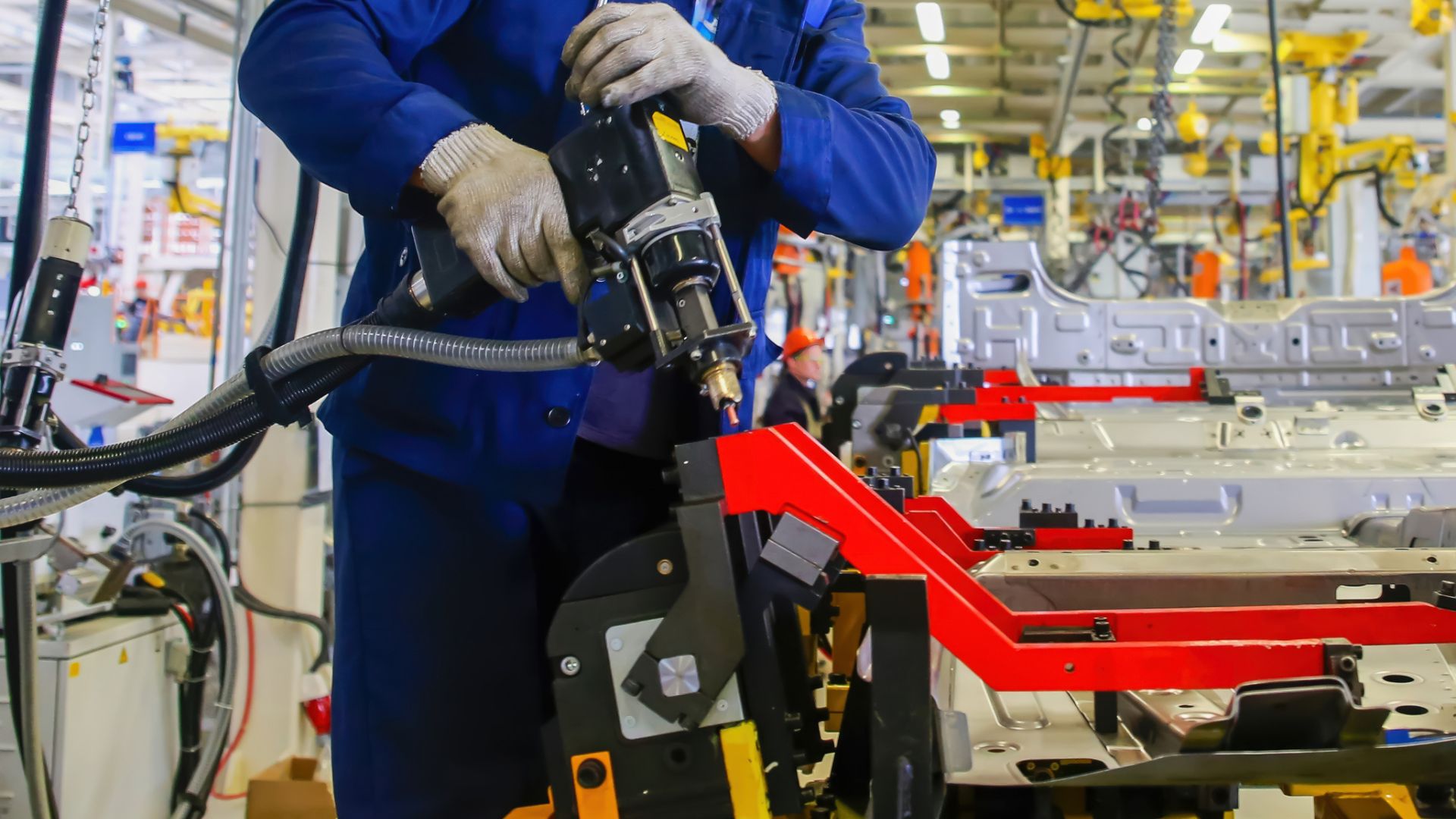
The need to move beyond spreadsheets, manual tracking, and disconnected systems is more urgent than ever. With customer expectations rising, regulatory scrutiny tightening, and supply-chain complexity escalating, automotive manufacturers must adopt digital tools that can provide real-time visibility, streamline processes, and drive operational excellence. Central to this evolution is the concept of a truly connected smart factory powered by robust production monitoring software. Drawing on insights from the Smart Factory team at Nulogy, this post explores what makes manufacturing software effective in the automotive sector and how you can identify the right solution for your operations.
Why Automotive Manufacturing Demands Specialized Software
Automotive manufacturing isn’t just large-scale production—it’s dynamic, data-intensive, and mutually dependent on precision, quality, and agility. Key factors that make automotive manufacturing distinct include:
- Complex supply chains and high part counts – With thousands of components feeding assembly lines, any upstream disruption can quickly ripple downstream. The ability to track and monitor inventory levels, supplier performance, and incoming material quality is critical.
- Zero tolerance for quality issues and recalls – Defects can not only cost money but also damage brand reputation and trigger regulatory action. Automotive software must enable rigorous quality control and traceability at every stage.
- Frequent changeovers, high volumes, tight margins – Whether stamping, welding, coating, or assembly, automotive plants require high uptime and efficient transitions between jobs. Every minute of unplanned downtime subtracts from your capacity and competitiveness.
- Rapid shifts in demand and product variation – Automakers must respond to changing consumer preferences, electrification, and new mobility models. This creates pressure to switch models, manage mixed-lines, and intelligently allocate capacity.
Given these demands, simply investing in a generic ERP or MES is not enough. What automotive manufacturers need is software that delivers real-time production monitoring, fosters the smart factory paradigm, and supports continuous improvement in throughput, quality, and cost.
What Is Production Monitoring—and Why It’s a Game-Changer
Production monitoring in the automotive context refers to the real-time capture, analysis, and visualization of operational data across machines, lines, shifts and plants. This involves monitoring equipment performance, production rates, inventory levels, and quality compliance.
Here are three of the most powerful benefits:
1. Real-time issue identification
When a machine slows down or deviates from its target cycle time, production monitoring systems deliver instant alerts. Managers don’t wait until the end of the shift to review reports—they act immediately. “Waiting for periodic reports is a luxury that modern manufacturing cannot afford.”
2. Improved overall equipment effectiveness (OEE)
By tracking setbacks like downtime, speed losses, scrap, and changeovers, production monitoring enables a sharper focus on OEE. Automotive plants using these tools can raise their OEE, unlocking hidden capacity and reducing manual tracking burdens.
3. Supply chain visibility and quality assurance
With a connected system, you can monitor suppliers, track material usage, and ensure quality standards are maintained. This becomes especially important when you’re working across tiers, dealing with high-volume components, and operating under tight regulatory scrutiny.
Production monitoring is the nerve system of the modern automotive manufacturing ecosystem—it senses, alerts, and enables action. And when you pair it with a broader smart factory strategy, the gains multiply.
Rising to the Smart Factory Era in Automotive
The term “smart factory” is often used loosely, but in the automotive sector it takes on very specific meaning: a production environment where data flows freely, analytics drive decisions, processes are highly automated and visible, and human-machine interaction is optimized for efficiency and agility.
Automotive software should support mobile access, configurable alerts, dashboards, and proactive analytics.
Key characteristics of a smart factory in the automotive space include:
- Digital dashboards and scoreboards replacing whiteboards and manual logs. Move from whiteboards and communication boards to automated scoreboards that eliminate the need to write data down manually.
- Mobile access — Supervisors and managers must be able to view machine cell OEE, downtime alerts, and scrap data on smartphones even when off-site.
- Configurable alerts and escalations — The system should notify stakeholders proactively when a line drifts from target, and escalate based on severity.
- Integration with maintenance and quality systems — Smart factory software should connect to maintenance systems, quality platforms, SCADA/PLC layers, inventory modules, and ERP/PLM for a unified view.
- Analytics for continuous improvement — Beyond real-time alerts, the software must support root-cause investigation, trend analysis, and improvement initiatives that feed into Six Sigma or lean programs.
When implemented properly, a smart factory approach transforms manufacturing from reactive firefighting to proactive, data-driven performance improvement.
Choosing the Right Software: What to Evaluate
Selecting the appropriate manufacturing software for an automotive manufacturing environment demands a tailored approach. Here’s a breakdown of criteria that matter:
1. Fit with your goals
Start by asking: What do you want to achieve? Do you need to reduce unplanned downtime, improve OEE, eliminate manual reporting, or enhance quality traceability? It all comes down to the goals you want to accomplish and determining if the software vendor can help you accomplish those goals.
2. Real-time visibility and actionable dashboards
Does the system deliver live data from the shop-floor to dashboards? Can you monitor cycle times, changeovers, scrap, and equipment performance in real-time? Look for software that moves you away from batch reporting toward continuous visibility.
3. Scalability and industry focus
Automotive manufacturers operate at scale, across multiple lines and often multiple sites. Choose a solution that has been proven in automotive environments, understands the unique production flows and constraints (e.g., stamping, welding, assembly, trim), and can scale globally.
4. Integration capabilities
Your software should integrate seamlessly with PLCs, OPC-UA/MTConnect, SCADA layers, ERP/MES, maintenance systems, and supply chain platforms. Without integration, data silos will persist, limiting visibility.
5. Ease of use and mobile accessibility
Manufacturing managers and floor supervisors need to act on data—not be overwhelmed by it. A system with intuitive dashboards, mobile apps, alerting, and configurable views reduces friction and adoption resistance.
6. Support for continuous improvement and lean initiatives
Software should enable root-cause analysis, downtime categorization, changeover tracking, skew insights, and support initiatives like Six Sigma and lean. The right tool becomes the single source of truth for improvement efforts.
7. Vendor credibility and industry experience
Look for vendors with a track record in automotive manufacturing.
Putting It Into Practice: Automotive Manufacturing Use-Cases
Here are a few practical examples where manufacturing software tailored for automotive production delivers real value:
- Reducing downtime on stamping or welding lines: A high-volume body-in-white line goes down for 20 minutes due to a press fault—costing tens of thousands in lost output. A real-time production monitoring system detects the drop in rate, triggers an alert, and surfaces the culprit immediately, enabling a faster response.
- Improving changeover efficiency: In mixed-model assembly, changeovers are frequent. Software tracks changeover time, flags deviations, and drives continuous improvement to reduce non-productive time and accelerate setup.
- Quality trace and defect prevention: At the final assembly or paint line, deviations in torque values or coating thickness get captured and fed into the system. The software links quality data back to specific machines, shifts and operators, enabling proactive correction before defects reach the customer.
- Supply-chain and inventory visibility: Critical components such as electronics modules or chassis frames can cause stoppages if delayed. The software monitors inventory consumption, supplier deliveries, and alerts when material buffers fall below threshold, supporting just-in-time operations.
- OEE monitoring for strategic decisions: Plant leadership needs to understand where capacity exists or bottlenecks persist. With OEE dashboards built on production monitoring data, executives can make decisions about deploying machines, shifting line balances, or investing in new equipment with confidence.
Overcoming Implementation Challenges
While the potential benefits are clear, adopting manufacturing software in automotive environments is not without challenges. Here’s how to address them:
- Data-integration complexity: Automotive plants often have legacy systems, proprietary PLCs, and multiple vendors. A successful rollout must include a clear integration roadmap, possibly with expert support.
- Change management and user adoption: Supervisors and line managers may resist new systems if they feel threatened or overwhelmed. Emphasizing dashboards over spreadsheets, mobile access, and simple alerting helps drive adoption.
- Alignment across teams: Production, quality, maintenance, as well as IT, must coordinate. A pilot approach focusing on one line or cell, with clear KPIs is recommended.
- Measuring ROI: Just installing a system isn’t enough—define clear metrics up front (e.g., downtime reduction, OEE uplift, manual report elimination). Clarity is key to choosing the right solution.
- Scaling globally: For multi-site automotive manufacturers, once a pilot proves successful, rollout must be standardized. Configure alerts, dashboards and rollup reporting in advance to simplify vision across sites.
Why Automotive Manufacturers Should View Software as a Strategic Enabler
In the past, manufacturing software may have been seen as “cost” or “IT project.” In today’s automotive landscape, it is a strategic enabler of capacity, growth and competitiveness. Consider:
- Uncovering hidden capacity: Production monitoring helps you unlock hidden capacity and reduce manual reporting burdens.
- Enabling faster decisions: By removing delays in data, you accelerate the time between problem detection and resolution—helping you outpace competitors.
- Supporting sustainability and compliance: With more regulations around emissions, waste, and traceability, software becomes part of your compliance toolchain as well as your production toolchain.
- Driving continuous improvement culture: Real-time data, visual boards, and proactive alerts reinforce a culture of continuous improvement—especially important in lean automotive operations.
- Adapting to new business models: As the industry transitions to EVs, mobility services, and connected vehicles, a flexible digital foundation helps you pivot quickly.
Key Takeaways and Next Steps
For manufacturing managers and continuous improvement specialists in the automotive industry, here’s what to keep in mind:
- Prioritize real-time visibility and production monitoring: If you’re still relying on periodic reports or manual logs, you’re leaving productivity on the table.
- Define your goals clearly: Whether it’s lowering downtime, improving OEE, cutting changeover time or enhancing quality, start there. Use those goals to evaluate software.
- Choose software built-for automotive and scaled environments: Integration with shop-floor systems, mobile access, alerting, and dashboards matter.
- Plan a pilot, measure results, then scale: Start small on one line or cell, show impact, then roll out broader.
- Use the software as a single source of truth: Replace manual boards, spreadsheets and fragmented systems. Consolidate into one platform for data, alerts, dashboards, and analytics.
- Tie in continuous-improvement initiatives: Use the data from the system to fuel lean, Six Sigma and other improvement workstreams.
- Make the smart factory real: Think beyond individual machines. Imagine your plant as a connected ecosystem of machines, data, people and insights—enabled by your manufacturing software.
In summary, the right manufacturing software for automotive operations is not just a nice-to-have—it is foundational for modern competitiveness. With a mature production monitoring platform and smart-factory mindset, you gain the visibility, agility, and performance required to thrive in the changing automotive landscape.
If you’d like help assessing specific software vendors, building a requirements checklist, or mapping out a pilot rollout for production monitoring in your automotive facility, talk to expert today or request a demo.