Not every production monitoring tool is built for the same plant. Some machine-monitoring platforms grew up on the floor of CNC job shops, where the core problem is squeezing more spindle utilization out of dozens of individual machining centers running different jobs all day.
Others are built for discrete manufacturing lines, food and beverage, co-packing, consumer goods, where the unit of analysis isn’t a single machine, it’s a full line with multiple stations feeding into one output. Buying the wrong fit means paying for capability you’ll never use, or missing the visibility you actually need.
What CNC-first monitoring is optimized for
A monitoring tool built around CNC and job-shop machining tends to excel at per-machine spindle utilization, tool wear tracking, and job-level cycle time across a fleet of largely independent machines. That’s the right lens when the core question is which of 40 machines is underutilized this week, and the machines don’t feed directly into each other on a single line.
What line-based, discrete manufacturing needs instead
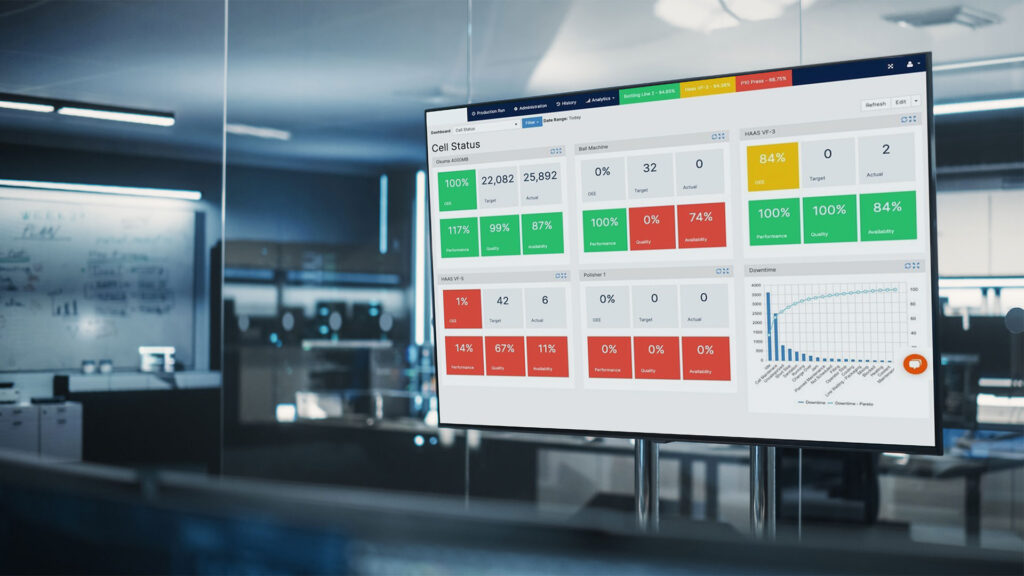
A food, beverage, or contract packaging plant runs differently. A line’s real output depends on every station working together: a filler, a labeler, a case packer, a palletizer, each one capable of stopping the whole line if it goes down. The metric that matters most isn’t any single machine’s utilization, it’s Line OEE, calculated from the final station’s throughput, because that’s what actually shipped. See how OEE, OPE, and TEEP differ and which one your plant should calculate.
The fit signal most plants miss
The clearest way to tell which category a plant falls into is mix and volume. A job shop running a high mix of low-volume custom parts on independent machines is a different animal from a plant running medium-low mix, medium-high volume production across a connected line, the profile of most food, beverage, and consumer packaged goods manufacturers. Nulogy Smart Factory is built specifically for that second profile: multi-station lines where the whole line’s performance, not one machine’s utilization, is the number a plant manager needs first.
What good line-level visibility actually includes
For a discrete manufacturing line, the monitoring system should give you:
- Real-time OEE calculated from the line’s final station, not averaged across machines that don’t reflect actual output.
- Shortstop detection down to 15 seconds, since micro-stops are usually the biggest gap between scheduled and actual output on a connected line.
- A connector catalog, Modbus, OPC UA, S7, and similar protocols, that can pull signals from a mixed fleet of machine ages and vendors without custom integration work for each one.
- Maintenance that triggers from real machine condition, not a fixed calendar, tied to the same downtime data.
Asking the right question before you buy
Before evaluating any production monitoring platform, a plant manager should be able to answer: is the bottleneck we’re trying to see a single machine’s utilization, or a full line’s throughput? The answer changes which platform actually fits, and it’s a cheaper question to answer before a contract than after one. A co-packer or contract manufacturer serving multiple brand customers should also weigh how monitoring data feeds into the broader software stack running the plant, since production monitoring rarely operates in isolation from scheduling and quality.
If your plant runs connected lines rather than independent job-shop machines, see how Smart Factory calculates real-time Line OEE, or read about why a system that fits today should still fit as you add lines.
Ready to see Nulogy in action? Book a demo with our knowledgable team today.